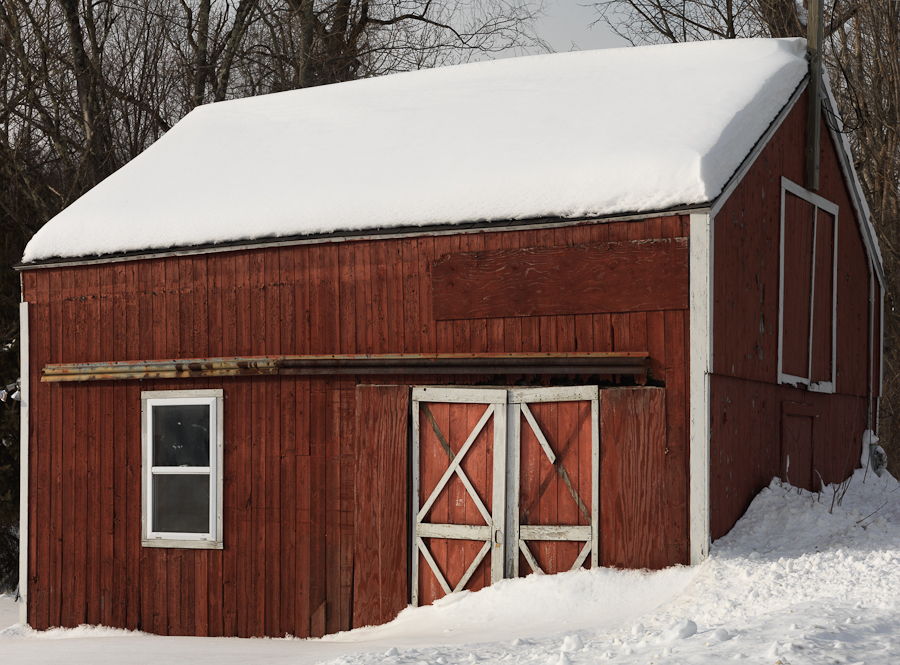
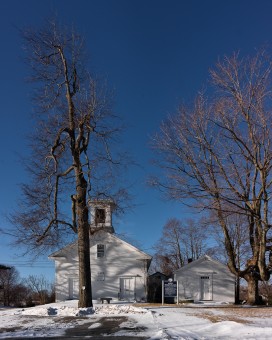
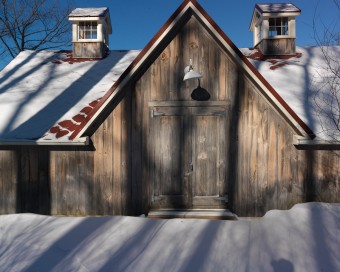
MILTON CONNECTICUT – We had weekend house guests in Connecticut. I cooked osso bucco, which with other activities gave little time for photography. I spared our guests exposure on this blog. A barn in a neighboring village caught with my Hasselblad.
Barn Milton Connecticut
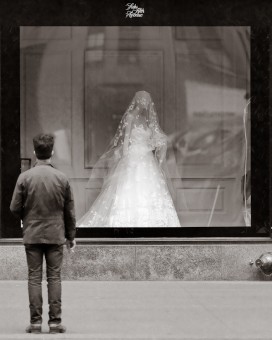
On this day last year: Saks Fifth Avenue window. This was taken with a long lens from across Fifth Avenue. One of my favorites from last year.
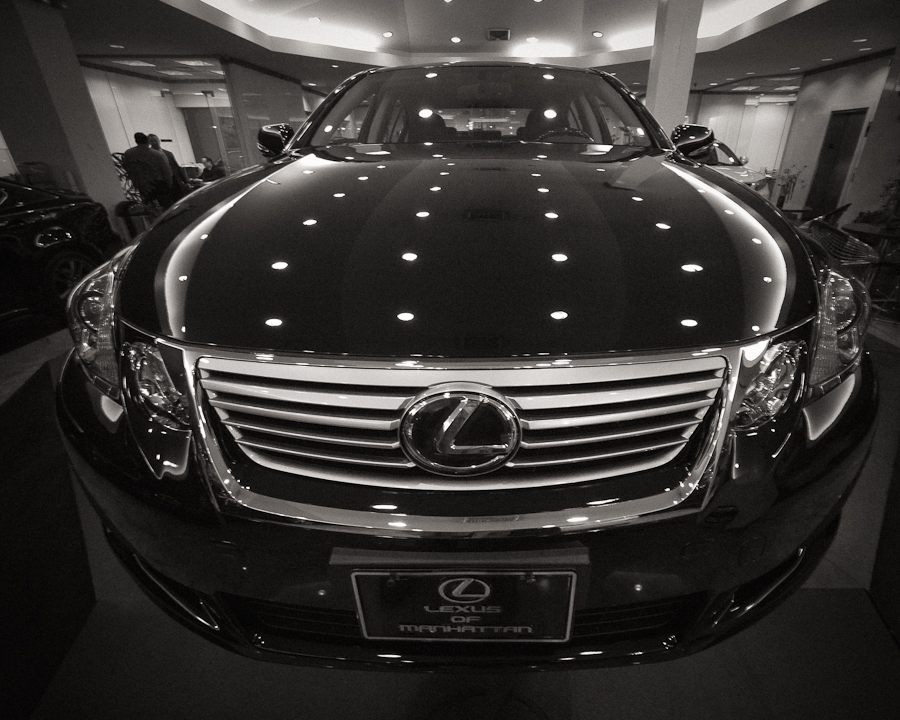
NEW YORK, NEW YORK – I picked my car up from being serviced to day and killed some time in the showroom with my Leica and a very wide lens, the 16mm Voigtlander. Here’s an image. One interesting aspect of the showroom is that the lighting is designed to be symmetrical from this car’s position, and the cove lighting in the ceiling emphasizes the car’s lines. These people are smarter than you would expect.
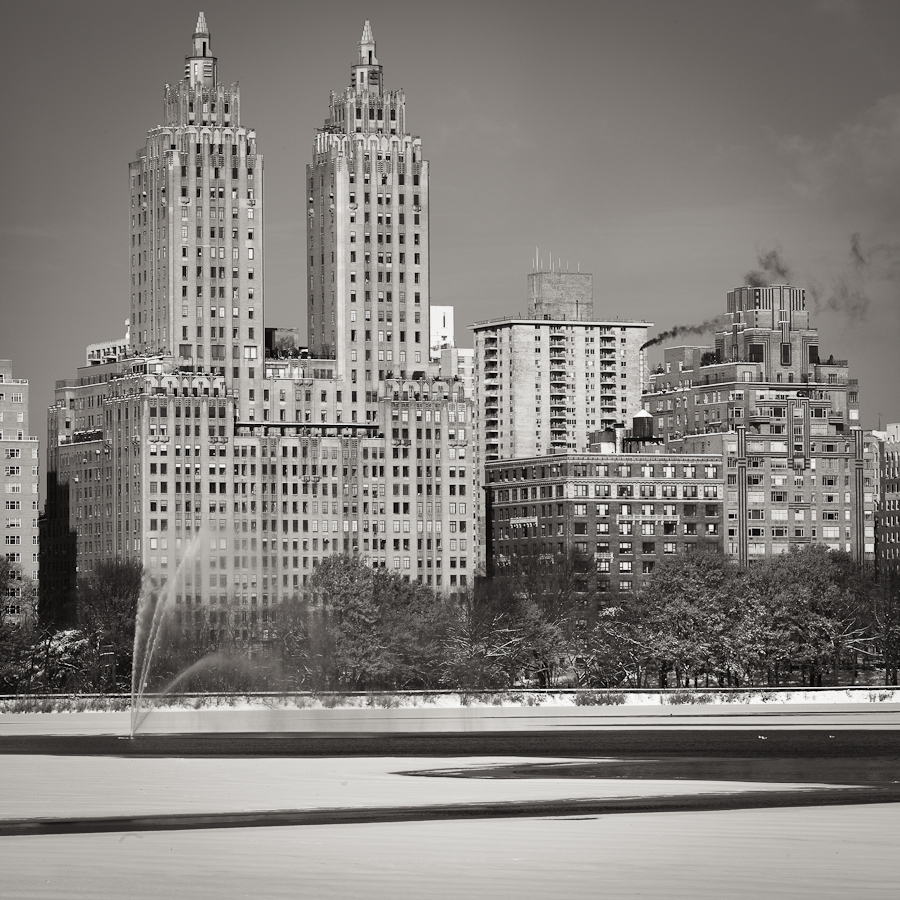
NEW YORK, NEW YORK – I spent the morning in a snow-covered Central Park. A few interesting images. Here’s a view of the El Dorado, one of three large building on Central Park West built by Emory Roth (the others are the Beresford and the San Remo). This is a common angle on the building, across the Central Park Reservoir. Two frames taken with my Hasselblad H4D-60, with a 300 mm lens on a monopod. This is another example of how well this camera’s files convert to black and white.
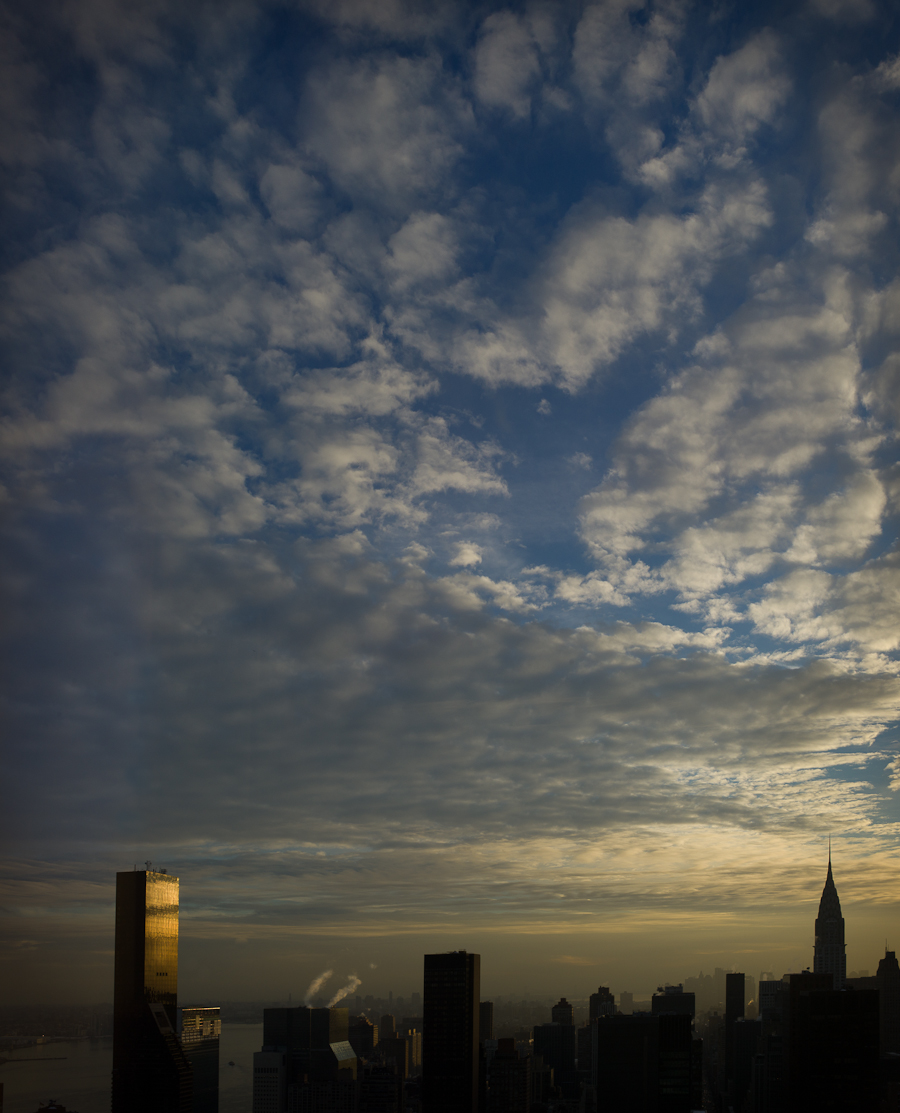
NEW YORK, NEW YORK – I spent most of the day in the office. Fortunately in the late afternoon there was a moment when the light was wonderful, so I caught this image looking south from 919 Third Avenue with my Leica M9 and 35mm Summilux II lens. It’s two frames stitched.
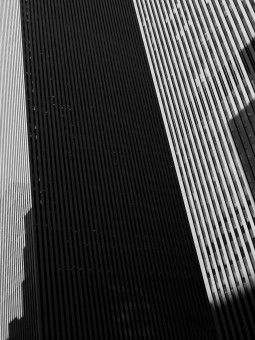
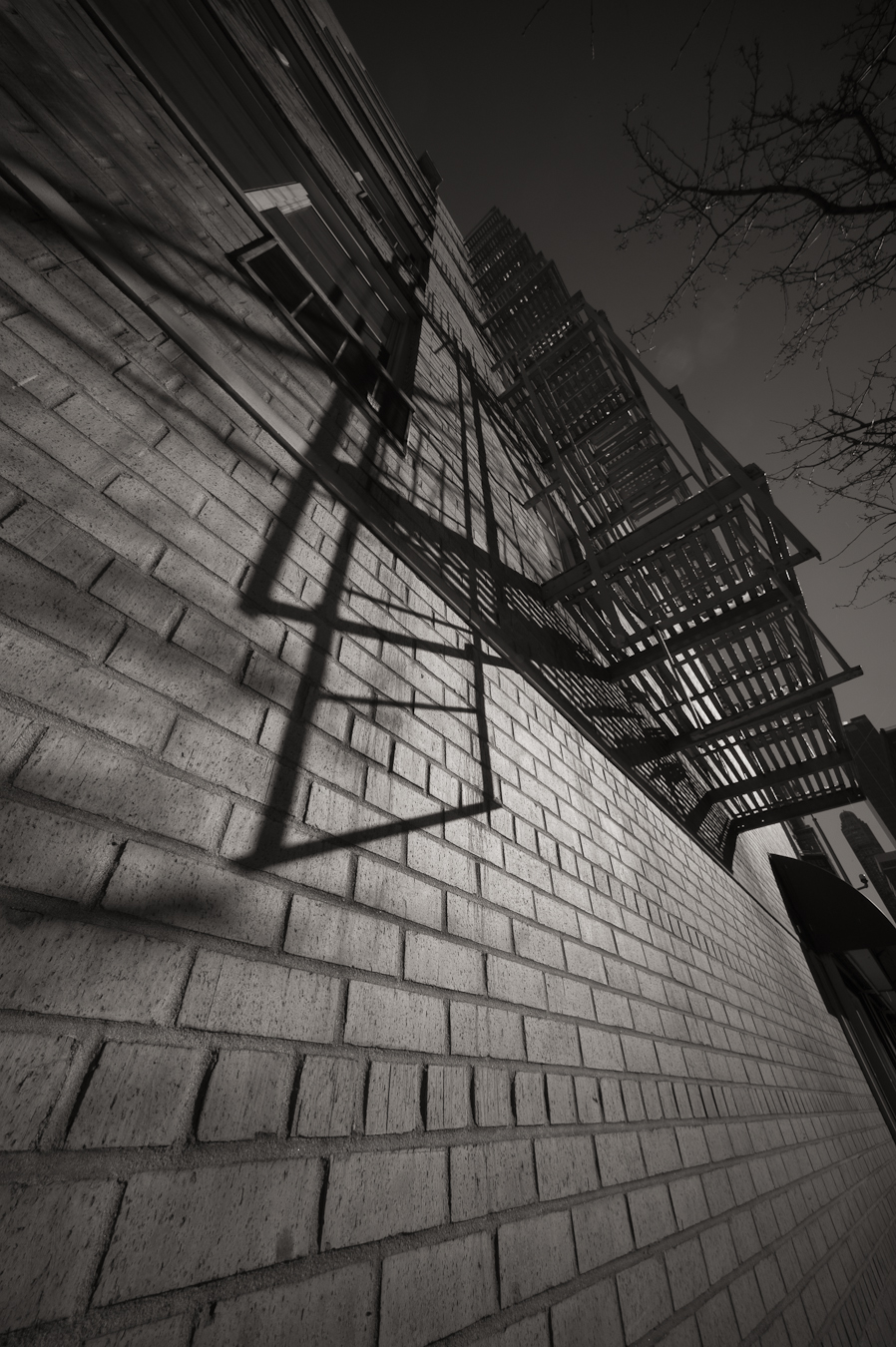
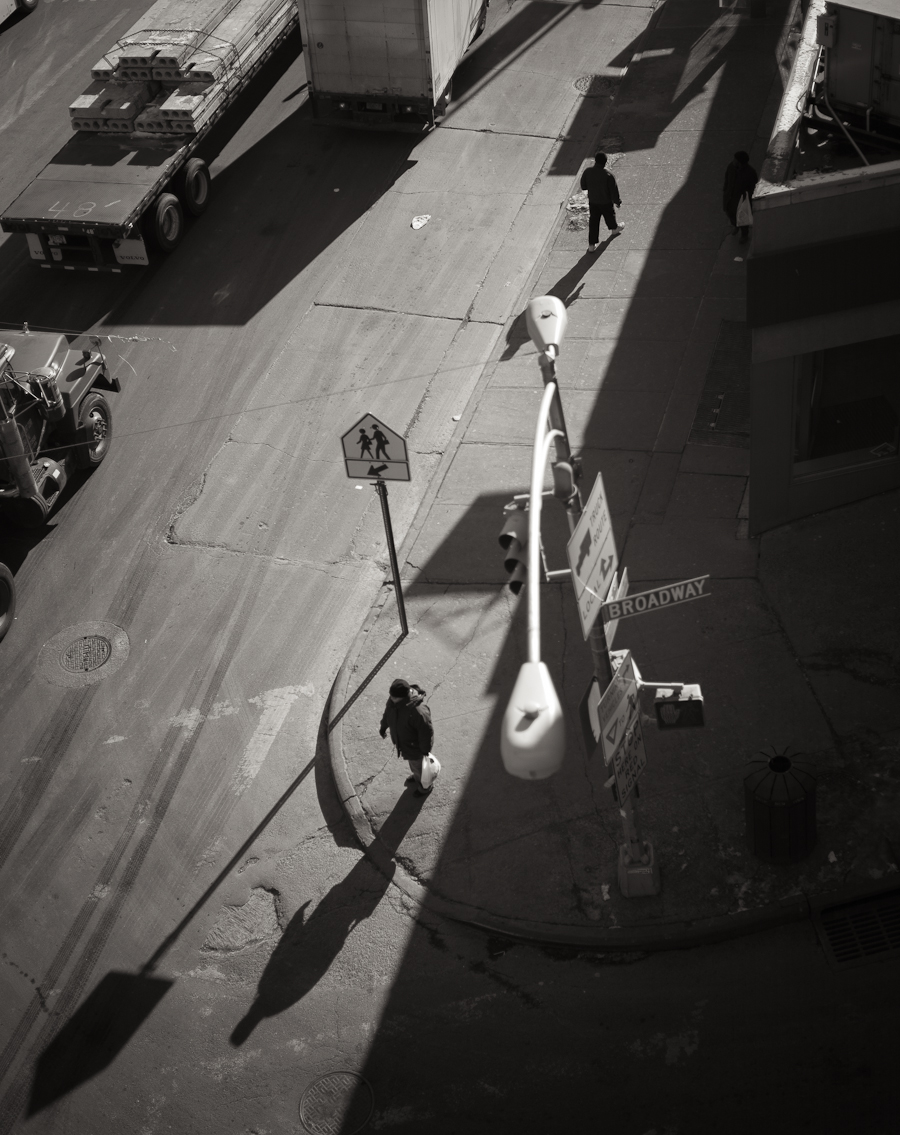
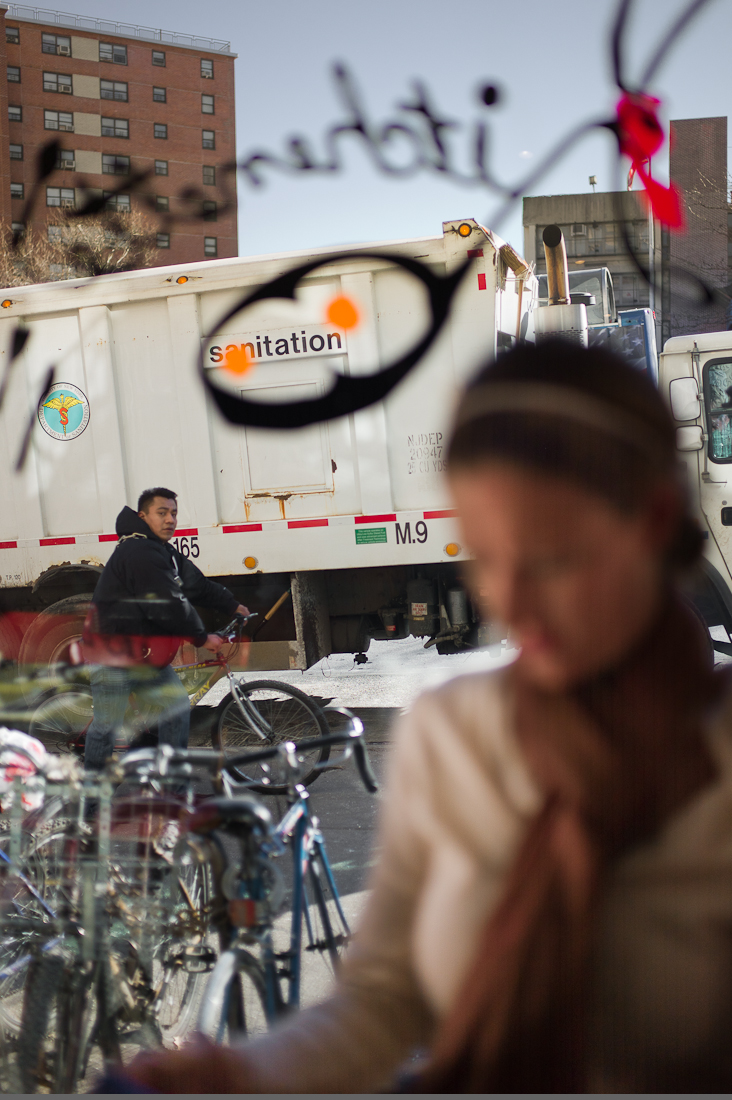
NEW YORK, NEW YORK – I had breakfast at Kitchenette in Harlem this morning with Francesca, our daughter. It’s a sure sign that the transformation of Harlem is complete when a restaurant from Tribeca opens a branch there. I had a Rodchenko moment on the elevated subway platform on the way back downtown. I’ve also included an image from Kitchenette. Both taken with my Leica M9 and a 35mm Summilux II lens. In daylight I’m shooting with a .9 neutral density filter (three f-stops) with this lens so I can shoot f/1.4 with narrow depth of field. I’m not certain that this works on the faux Rodchenko – I like it better at the Kitchenette.
WARREN CONNECITCUT – I’ve been experimenting with tilts and shifts on my Hasselblad with an HTS 1.5 tilt/shift adapter. One of the traditional reasons to tilt the lens on a view camera is to extend depth of field by tilting the focus plane; the technique is known as the Scheimpflug principle. I’ve been struggling with getting accurate focus with the HTS 1.5 so I’ve gone back to an alternative digital solution to the problem of extending depth of field, focus stacking. The idea is to take multiple images with the focus point shifted slightly from image and stack the images in specialized software to achieve an image that in focus throughout. See my post for January 4, 2011.
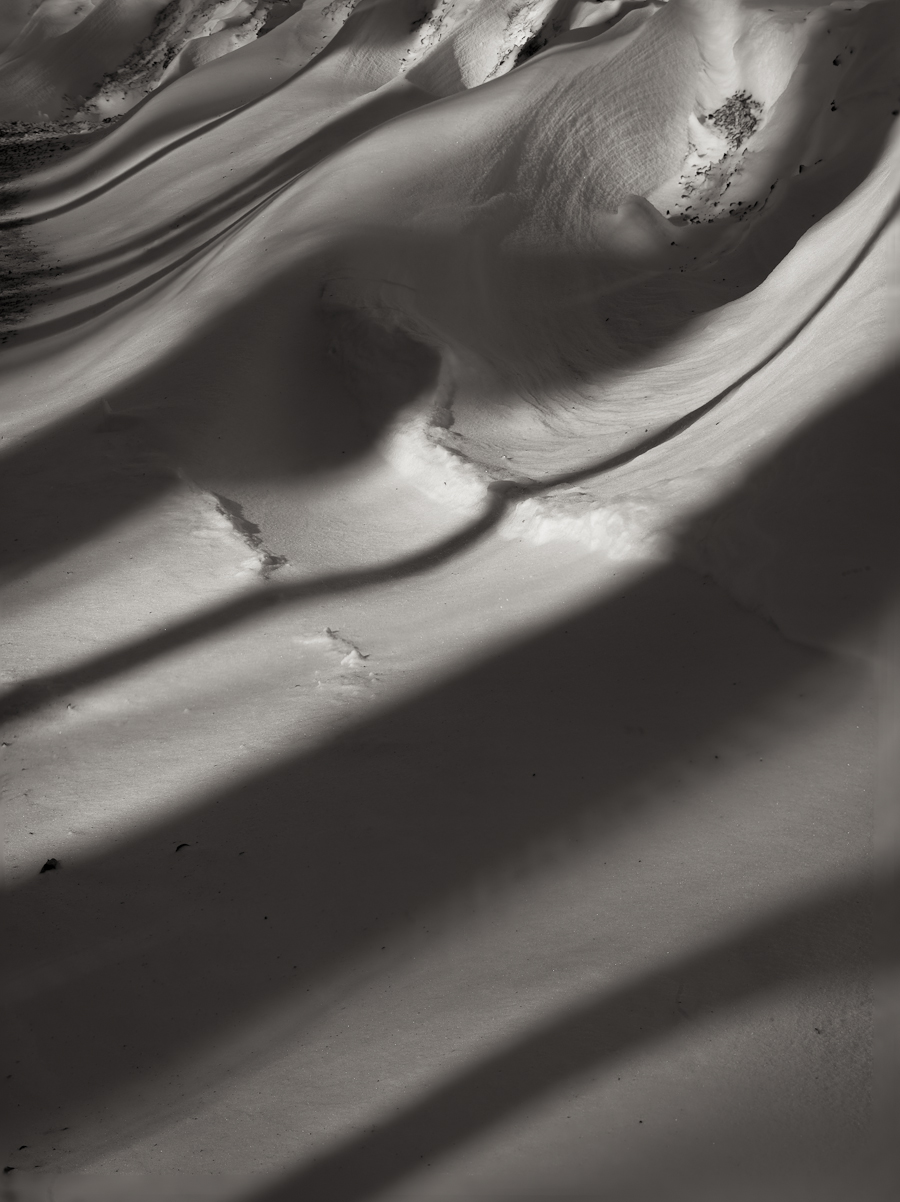
Here’s an image taken with my Hasselblad H4D and an HC 300 mm lens. I used the long lens to obtain compression in the image and to compose it to my taste. The 300 mm lens has shallow depth of field, even when stopped down, and there are image quality issues with stopping down to extreme levels. So I took 9 frames moving the focus plane through the image, and stacked them in Helicon Focus. The process is relatively painless as long as you have a lot of computing power. As I’ve noted previously black and white conversions from the Hasselblad are more like large format film than any other camera that I’ve used since I started with digital.
Wind blown snow, Warren Connecitcut
On this day one year ago: Snow drifts! How about that. Also taken with my Hasselblad. I guess this demonstrates that there are only so many landscape subject to photograph when the landscape is covered by snow. I prefer this year’s effort. Warren snow drifts