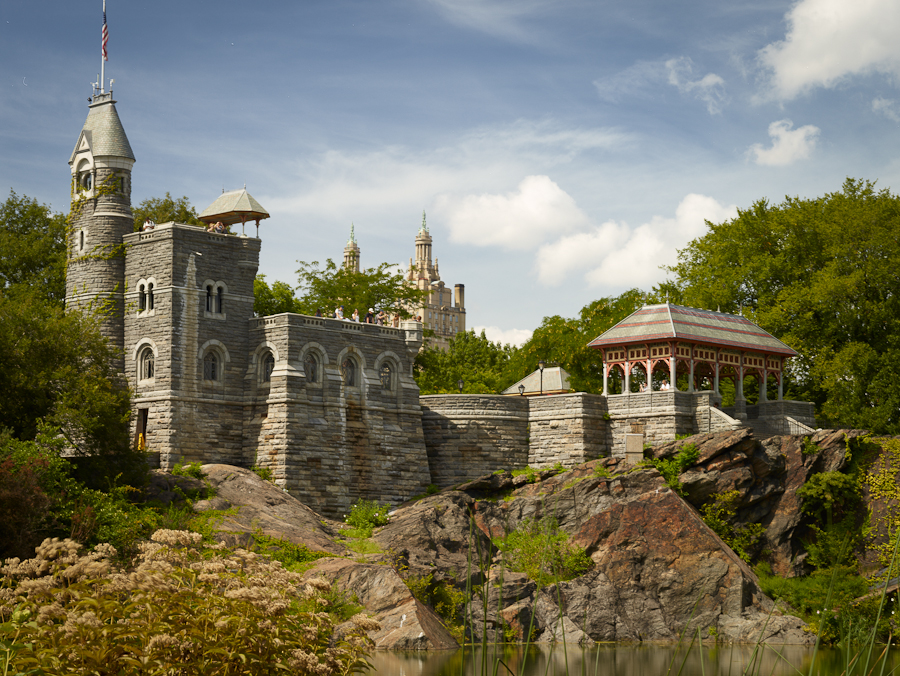
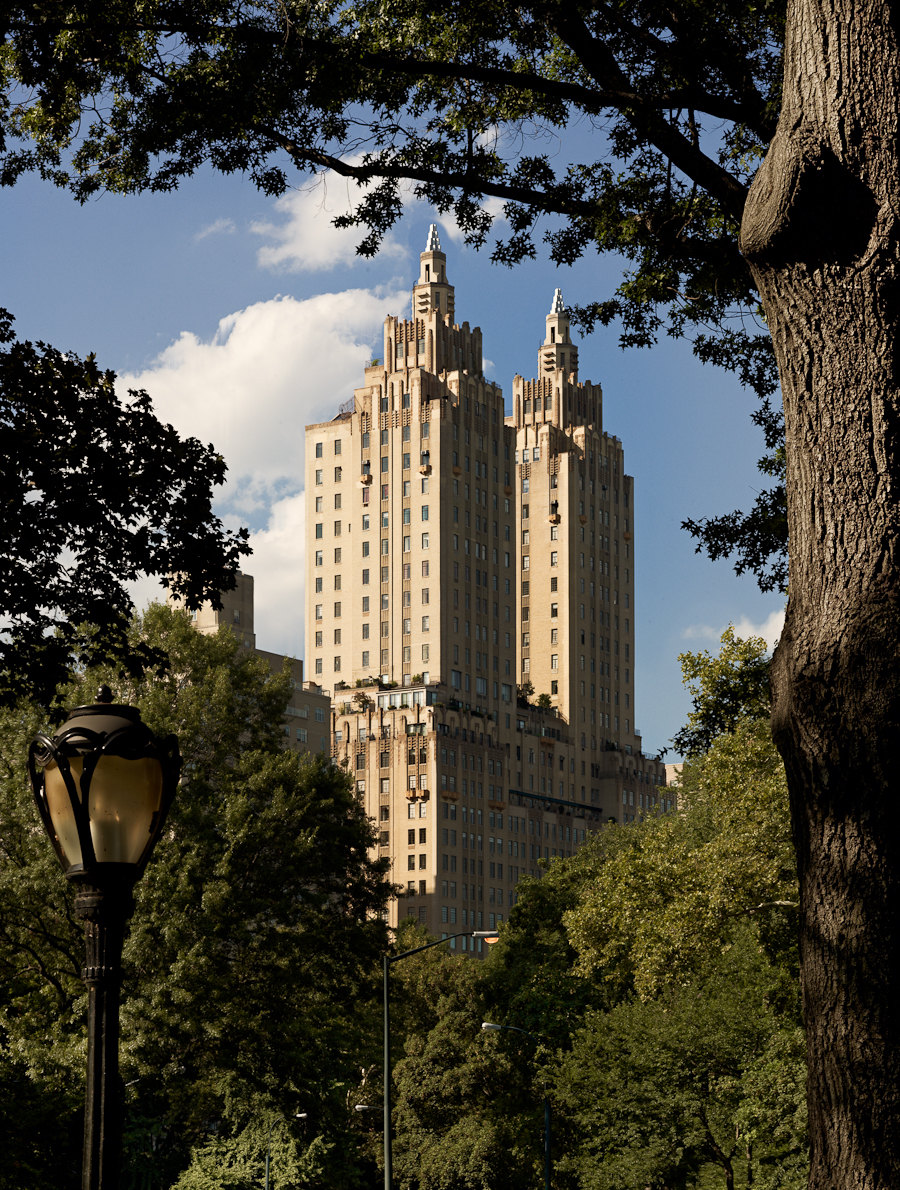
NEW YORK NEW YORK – I took my Alpa Max and a light tripod to Central Park to shoot with my Schneider 120mm lens. The Max and the !20 were a delight to use. On reviewing the results the light tripod was a disappointment – in the future I’m going to need to use a serious tripod with this lens. I’m fighting a battle with myself to avoid an overly composed look when working on a tripod, and generally loosing. Here’s an example:
Belvedere Castle
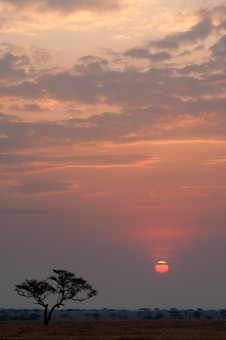
On this day one year ago: Sunset on the Maasai Mara. I actually just posted this – I had taken the picture but hadn’t posted it in the confusion of pulling the Africa materials together.
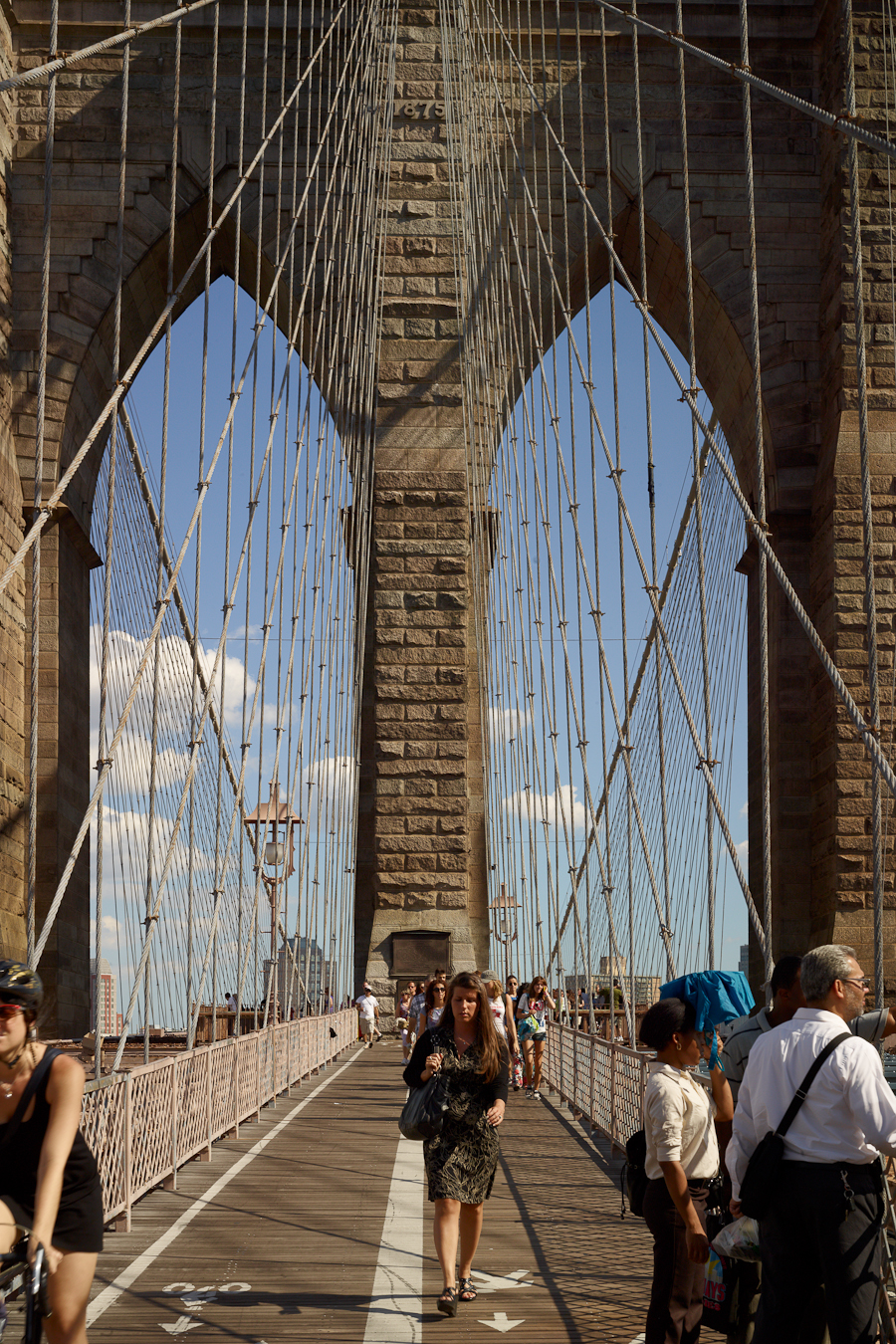
NEW YORK, NEW YORK – This afternoon I walked the Brooklyn Bridge from the Manhattan side. It was seriously crowded. I shot with my Alpa and the 72mm Schneider lens. Framing continues to be a challenge. Out of the 30 or 40 images I thought this was the best point of view, but it’s flawed because I didn’t recognize it at the time so I didn’t take the time to wait for the optimum moment in terms of the pedestrians. Near misses for me two days in a row. Here it is:
Brooklyn Bridge
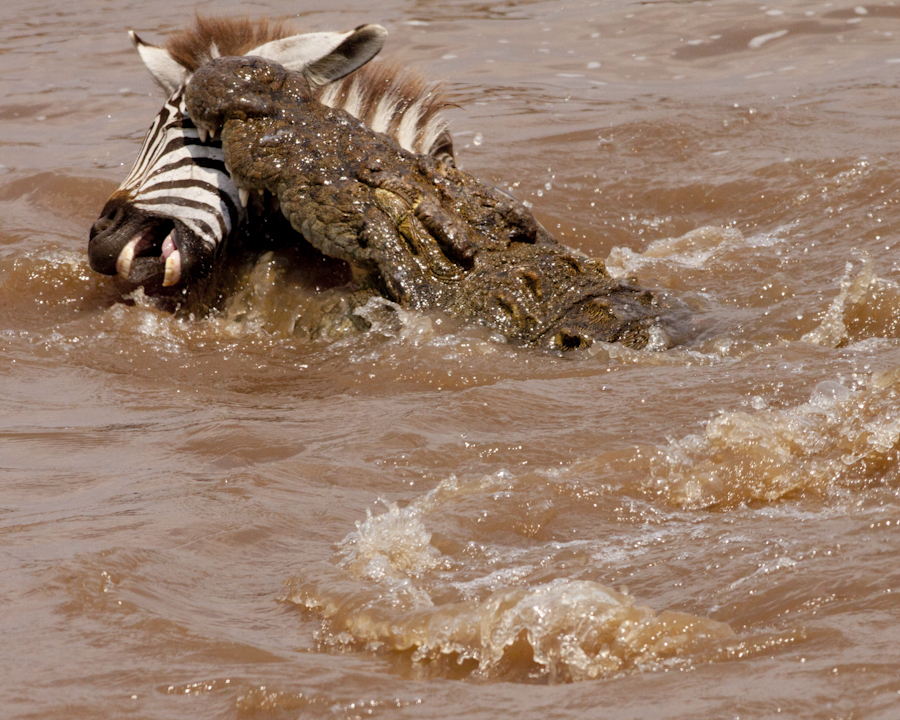
On this day last year: wildebeest migration. I had so many images that I did three posts for the day. Here’s a crocodile killing a zebra.
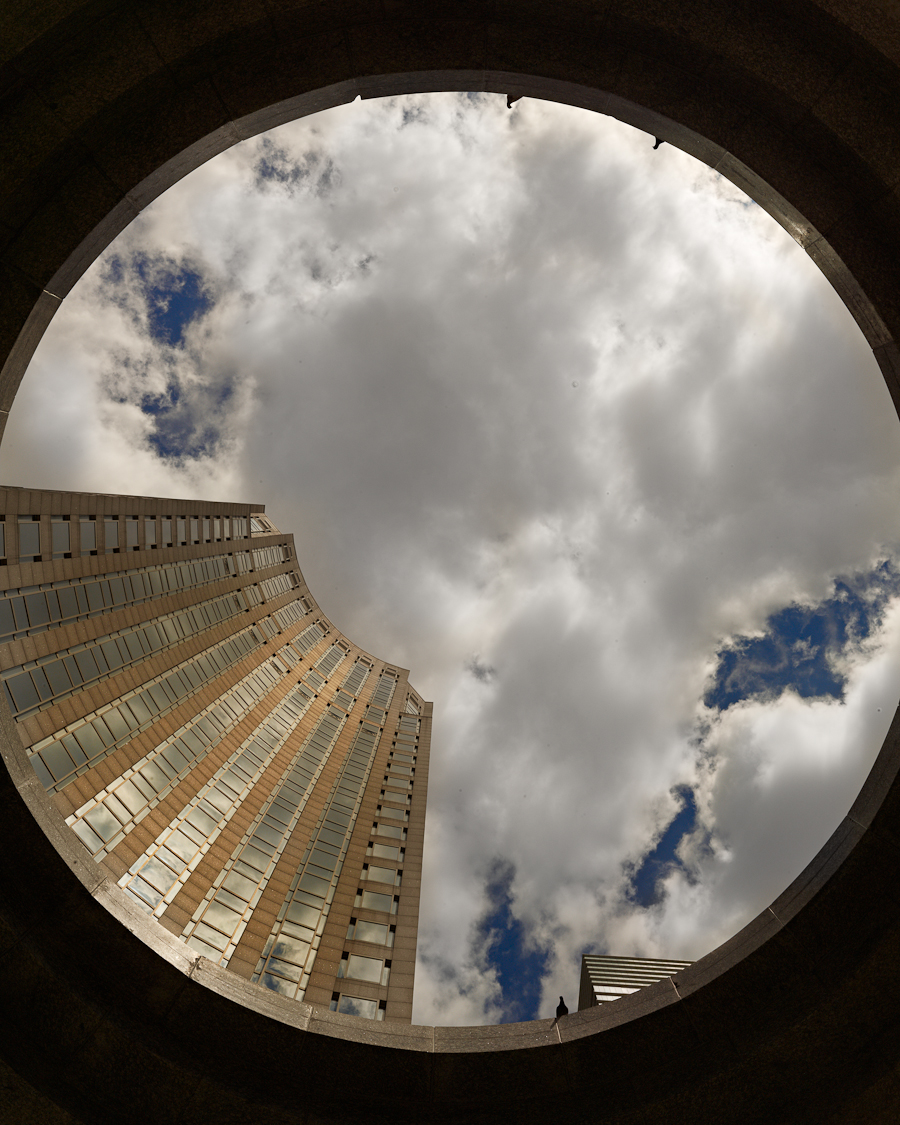
NEW YORK, NEW YORK – I walked to the office today with my Alpa and the 72mm Schneider Digitar. I’m experimenting to see if it’s possible to hand hold the camera with this lens. (Longer lenses are more demanding in terms of camera movement than shorter lenses.) The light was just ok. There’s a no name spec building at the Northwest corner of 57th street and Lexington Avenue. I played around with the plaza in front of it, and finally realized that the shot for the day was looking straight up. You’ll see that the framing would have been better if I had included the full circle on the sides of the frame. The Alpa finder is kind of approximate – based in this fairly disappointing experience I’ll be trying some of my Leica finders on the Alpa to see if I can get more accurate results.
NEW YORK NEW YORK – So what’s so technical about a “technical camera”. Here’s a link to last week’s post on my Alpa TC but it just looks unwieldy and it lacks a lot of things (autos focus and automatic exposure) that we take for granted on a pocket point and shoot.
First, what’s so technical about these things? Well last week’s Alpa TC is actually the little brother of the Alpa Max, a camera that permits the back and lens to be shifted relative to each other, and permits the lens to be titled relative to the plane of the sensor with longer focal length lenses. The ability to shift the lens upward to look up while keeping the camera level permits great flexibility in composition while keeping vertical lines properly parallel (if you tilt the camera up they appear to converge). Of course once you move into shifts you are committed to working on a tripod. In my setup composition is done through live view on the IQ 180’s lcd panel (live view is common in consumer cameras but for technical reasons is hard to implement in medium format digital backs). Working with the Alpa Max is fully the digital equivalent of working with a view camera and 4 x 5 film (the debate on the “quality” of film vs. digital ended a long time ago – on a resolution basis the IQ 180 is fully comparable to r=legacy 8 x 10 film, but the look is different).
Here’s the Max with the lens shifted upward relative to the back:
Alpa MaxAlpa Max
This setup (the tripod and the need to fiddle with a complex camera) forces one to work slowly. It leads to consciously “composed” work. Some of my best work is actually shot off-hand and intuitively. The challenge for me in working with a large camera is to keep the images interesting (getting them to be perfect is not that hard). The following capture with the Max has the character of thousands of other images captured with similar equipment. This bothers me a bit, but I suppose it shouldn’t – it’s really no different that the millions of “mom and pop at the beach” snapshots that all look the same except for who mom and pop are.
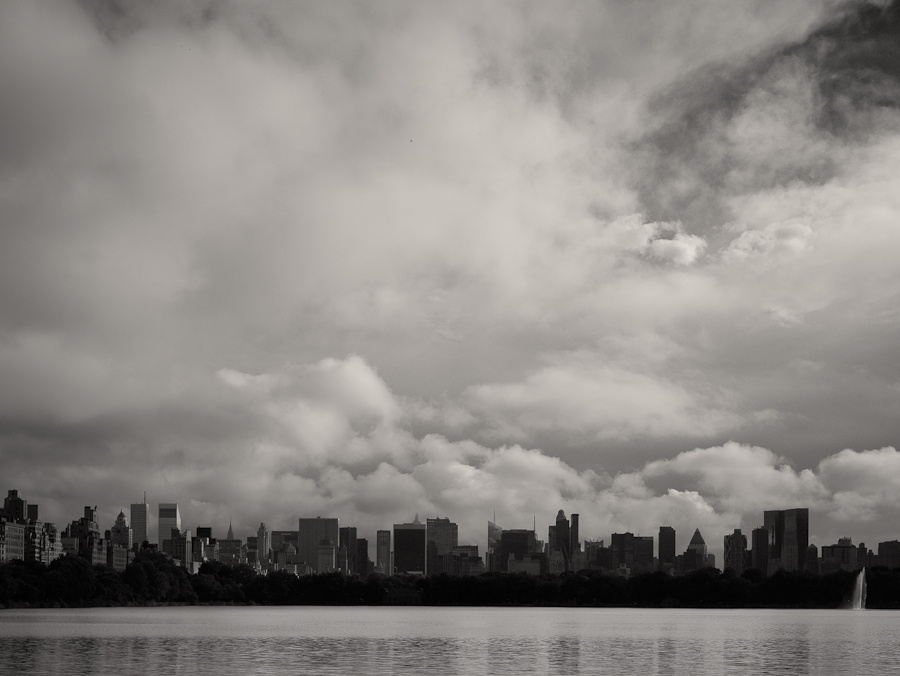
Central Park
I’ve included a grayscale conversion of this image that further emphasizes how this method of capturing images nudges you in the direction of traditional landscape.
Central Park
On this day last year: A travel day. A travel day last year, on our way to Nairobi and a date with some wildlife.
NEW YORK, NEW YORK – I spent the day with my Leica with my 12mm Voigtlander lens attached. That’s right, 12mm on a full frame camera. This lens is really, really wide. Int’s a miracle that it even forms an image. You don’t need a viewfinder – just assume that it gets everything. What’s in focus? Everything, because of the extreme depth of field. I put a small level on the camera when I use this lens – if it’s only slightly off level vertical lines converge wildly because of the extreme wide angle perspective. This lens has a serious issue on a digital camera: there are wild color casts across the frame, and there are two plus stops of “cosine vignetting”, light fall off toward the edge of the frame. I’ve learned how to solve this problem with my Alpa – that’w why I reached for this lens.
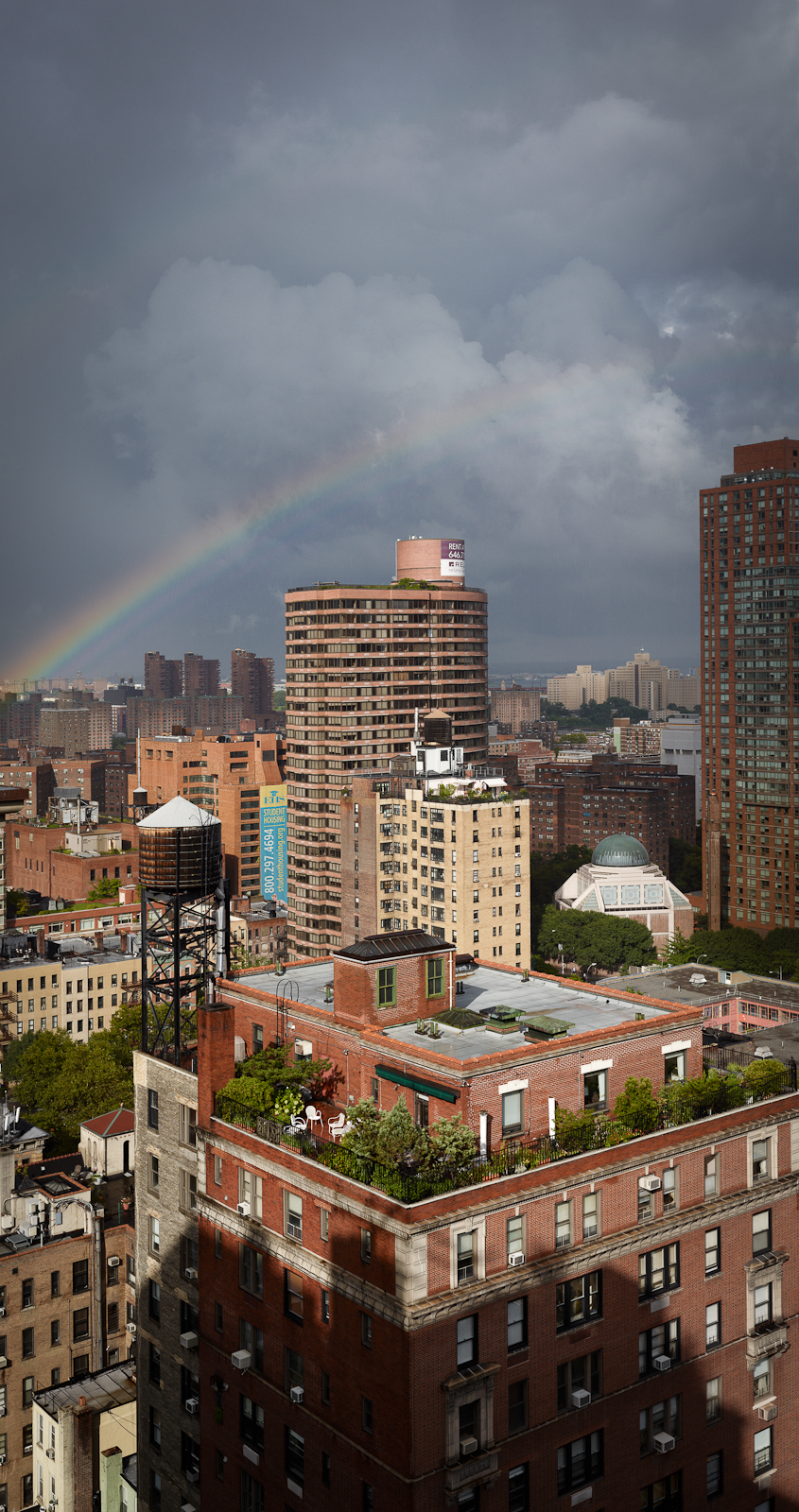
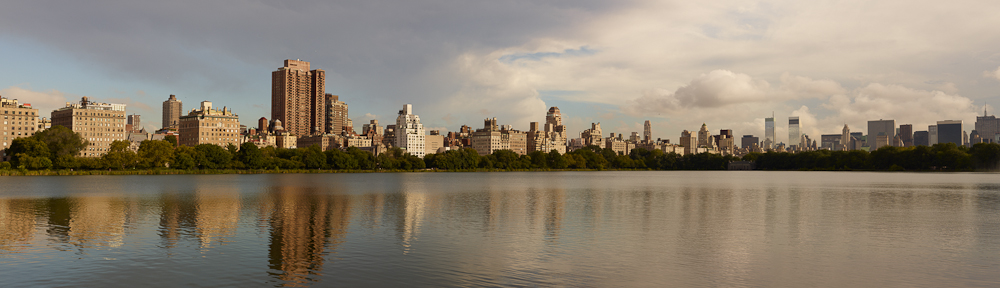
NEW YORK, NEW YORK – We had violent thunderstorms today. As it was starting to clear I took my AlpA TC, a 72mm Schneider XL and a light tripod to the roof of our building, and then to the Central Park Reservoir. The lurid colors are real. The fact that the landscape is soaking wet enhances colors in the brilliant light that followed the storm. The first color images is stitched from two separate images; the second color imagefrom five separate images.
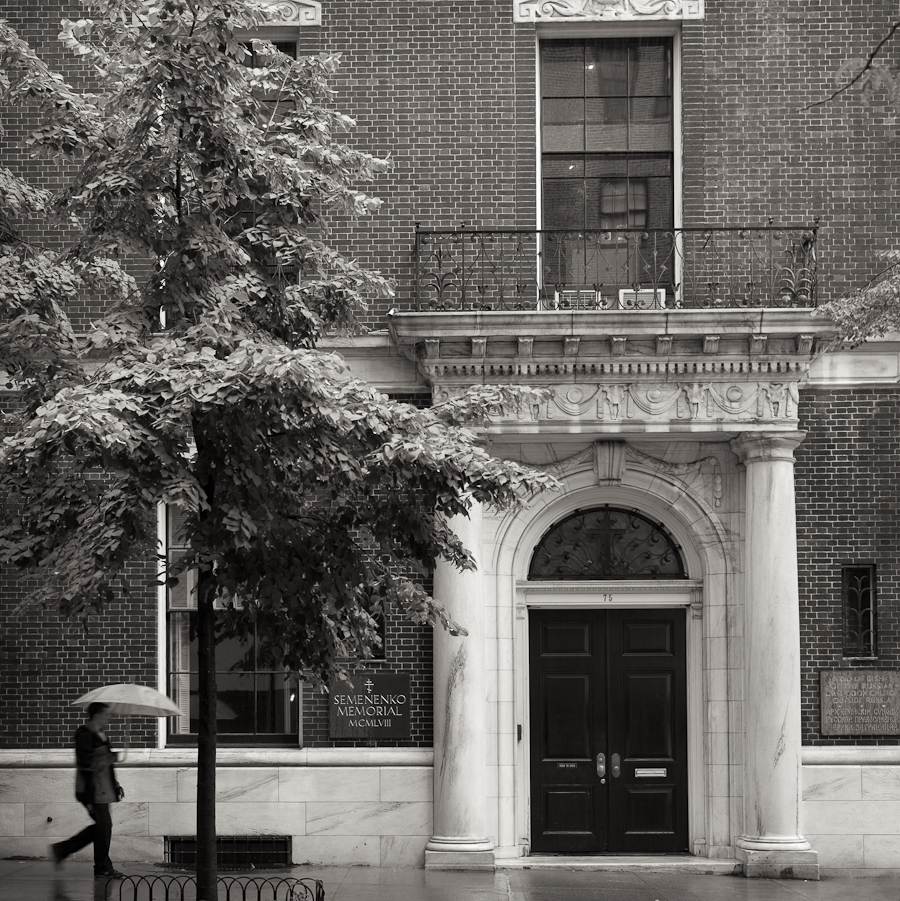
NEW YORK, NEW YORK – It poured rain all day. Given the weather we had decided to stay in New York for the weekend. I didn’t get out except to walk the dog. There was no one on the streets of Cargegie Hill, our neighborhood. What do you do on a rainy Sunday? Well I spent the better part of the day updating my website with a slightly new look and much better and more flexible software.
I took my Leica out while walking the dog. The camera is a 1954 design and weather sealed cameras weren’t in the picture then (modern high end designs from Nikon and Canon are completely weather proof – I’ve taken them into the shower to clean them off after they were splashed with ocean spray). But the machining tolerances on the Leica are very tight so it’s sort of weather resistant, but you have to use common sense.
A shot a bunch of rainswept streets and a few pedestrians with umbrellas. The best of a fairly poor lot was of the Synod of the Russian Orthodox Church Outside of Russia. Here’w what I said about it on November 24, 2010:
This building was originally built as a residence for George F. Baker Jr. by Delano & Aldrich, the firm that became the ‘society architects” in New York after Stanford White’s murder in 1906. The Russian Orthodox Church Outside of Russia is a splinter of the Russian Orthodox Church formed after the Bolshevik Revolution – it is now reconciled with the main body of the Russian Church.
Taken with my Leica M9 and a 50mm Summilux lens. Two frames stitched in Photoshop.