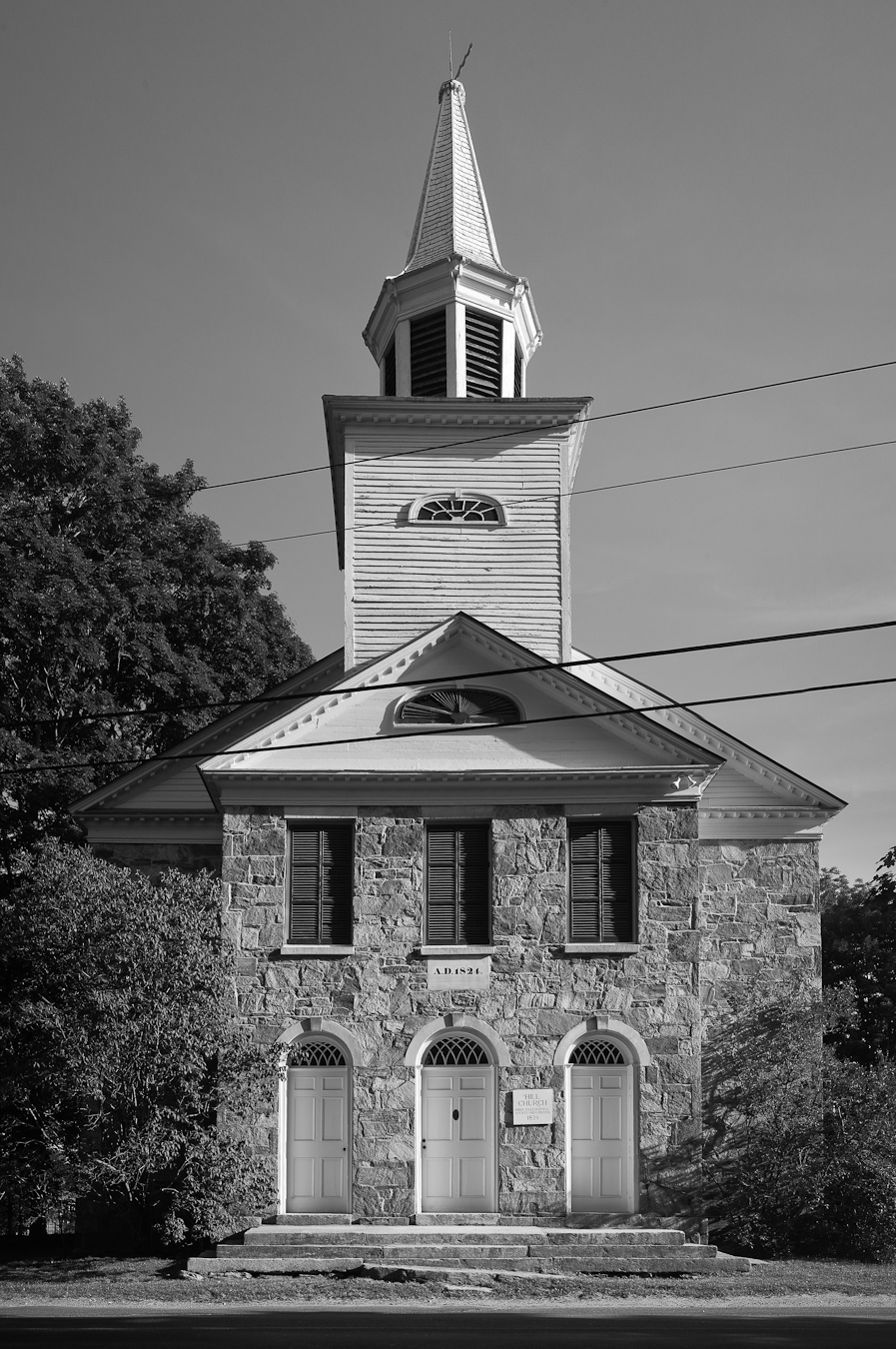
NEW PRESTON, CONNECTICUT – There are two Congregational Church buildings in New Preston. For most of the year the congregation meets in a lovely classical New England structure on a hill near the center of the village, which I photographed at sunrise on November 7, 2009. Here’s a link: New Preston Church During the summer months the congregation meets in a stone building a few miles away.
New Preston Stone Church
Taken with a Leica M9 and 35mm Summicron Asph. lens. Three frames stitched with Autopano Pro. Perspective touched up in Photoshop.
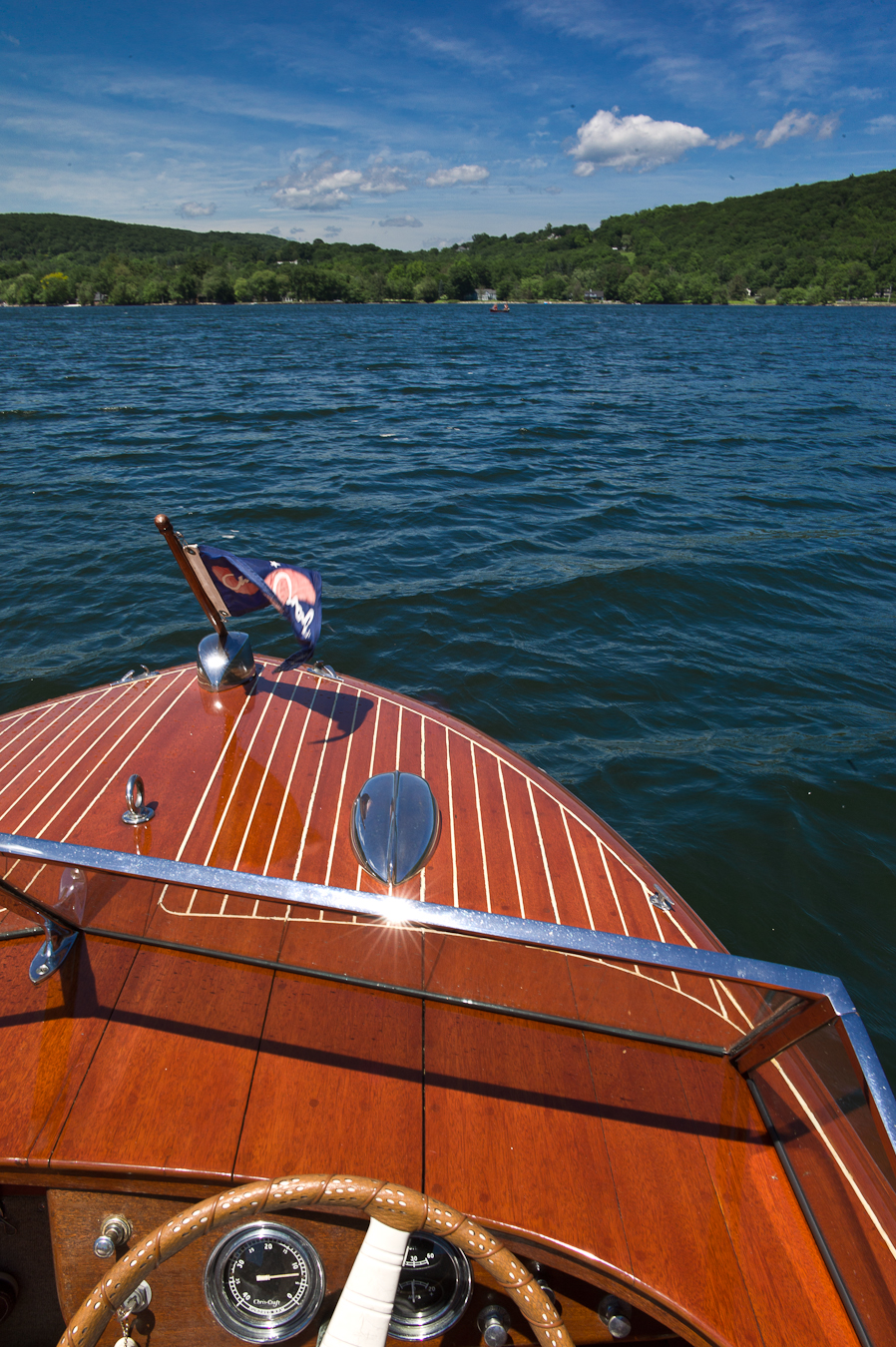
WASHINGTON CONNECTICUT – Boating on Lake Waramaug. The following is from the Wikipedia entry on Lake Waramaug:
“Although natural in origin, the surface elevation of the lake has been raised by a small concrete and masonry dam. The surface area of the lake is approximately 680 acres (2.8 km2). The lake has a maximum depth of 40 feet (12 m), an average depth of 22 feet (7 m), and contains approximately 4.8 billion gallons of water. The lake is fed by Sucker Brook (Lake Waramaug Brook), numerous small streams, and groundwater that enters through the lake bottom. Drainage from Waramaug Lake flows southward into the East Aspetuck River. . . . The lake is named after a chief of the Wyantenock tribe. Chief Waramaug and his followers summered in the area now covered by Lake Waramaug.”
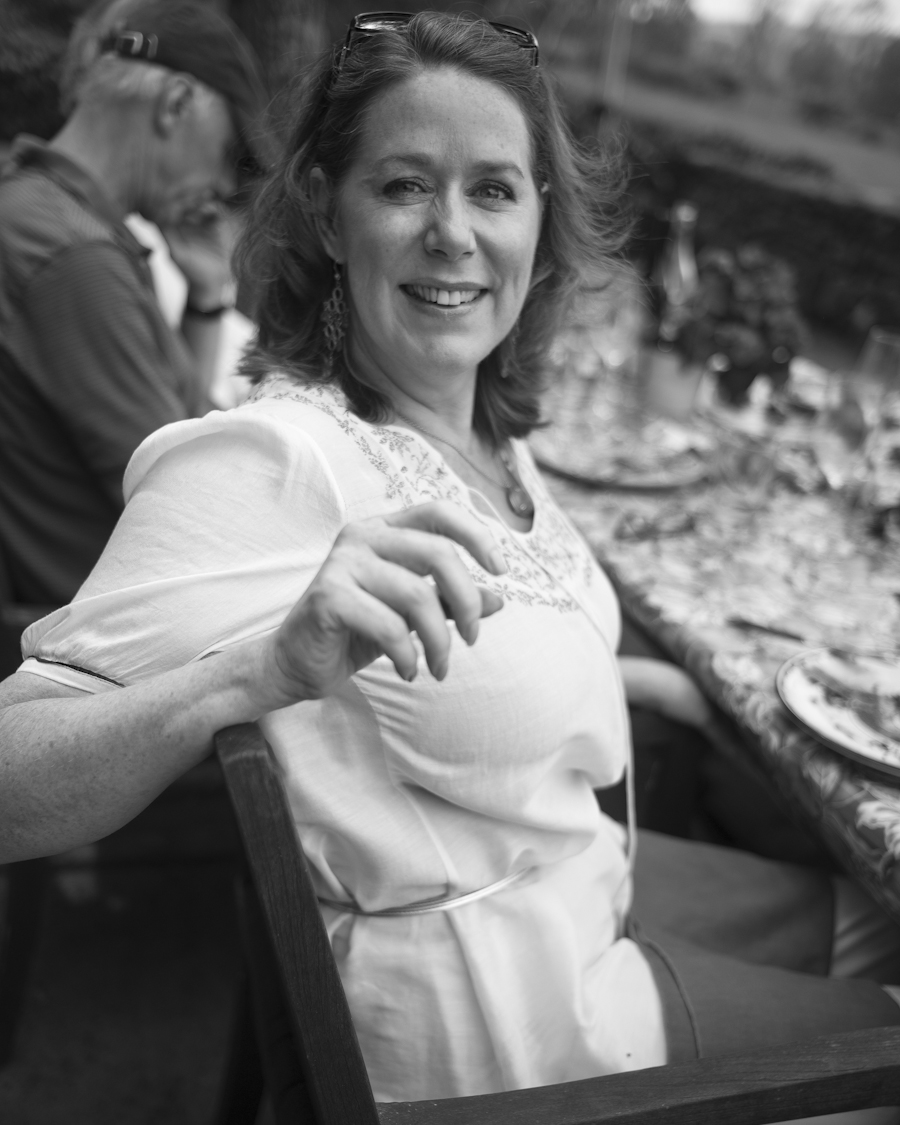
NEW YORK, NEW YORK – We had dinner at Island, a restaurant near us on Madison Avenue, with Alexander (our son), Laura (his girlfriend) and Laura’s parents. This is a rare image of Maria.
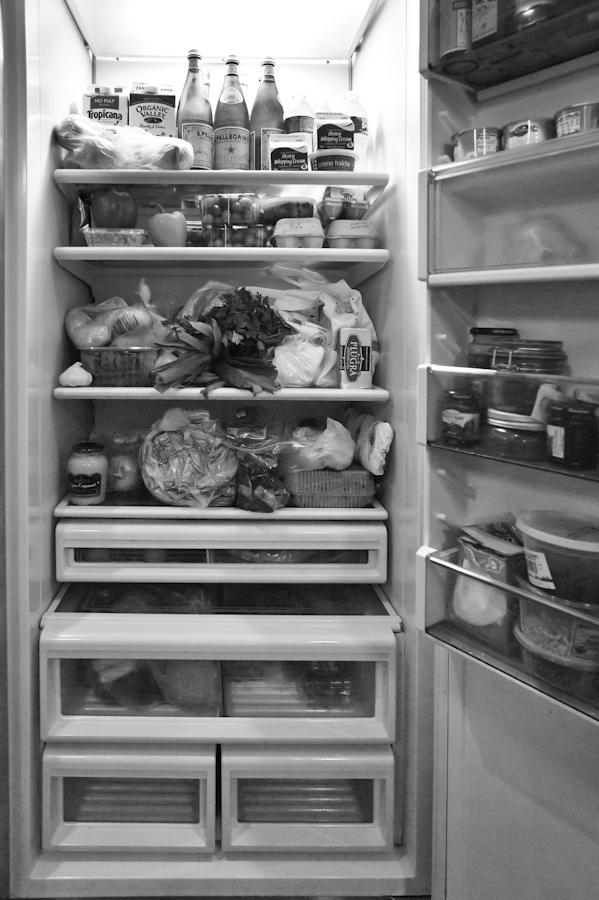
NEW YORK, NEW YORK – A boring day from a photographic standpoint. I was busy at the office and outside the light was dull. On the way home I shopped for groceries for a lunch on Saturday. Here is an image of the packed refrigerator. No one said that a photo every day would be easy.
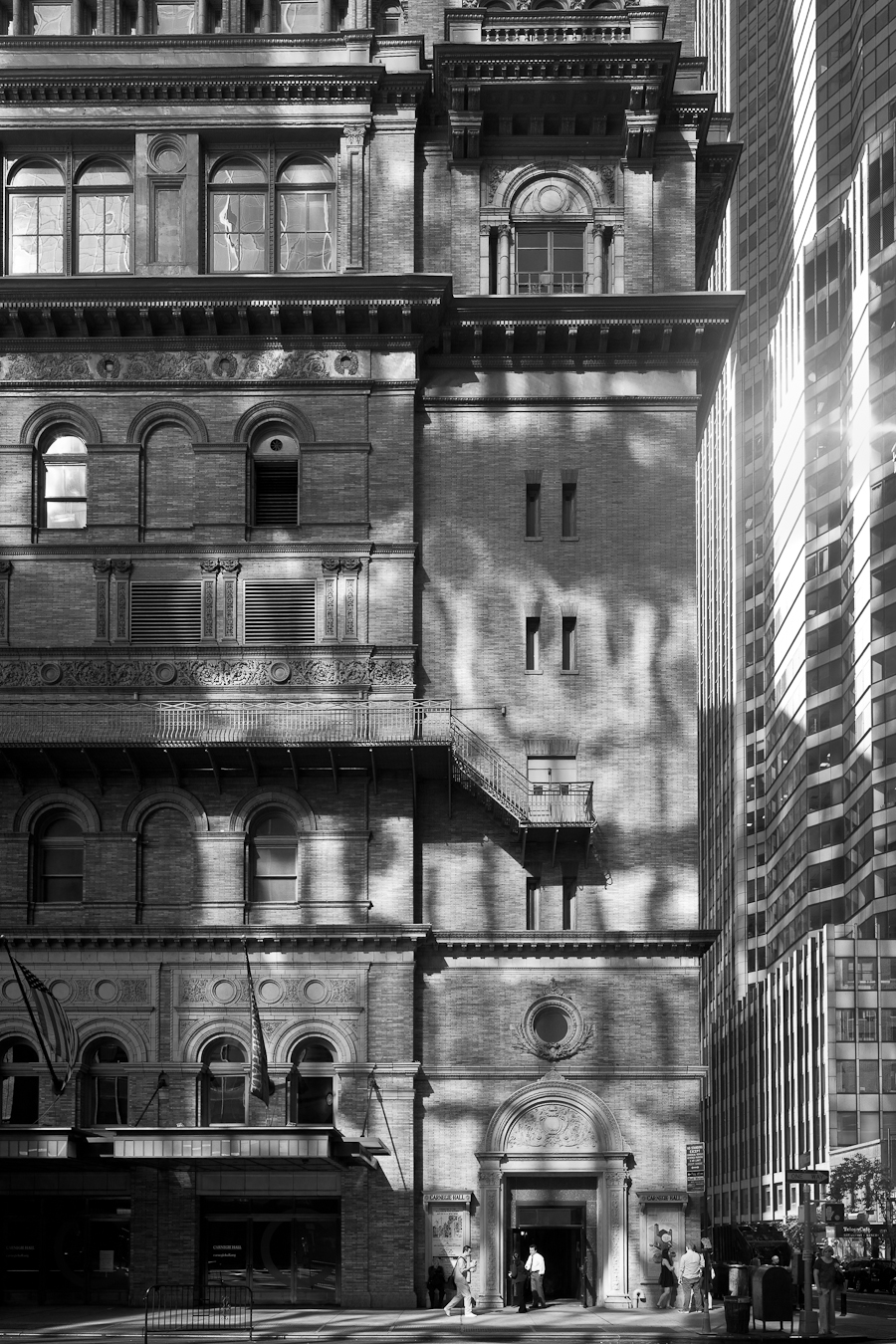
NEW YORK, NEW YORK – Back in New York. While walking back from the west side (where I had left my car for service) a came across Carnegie Hall in dappled light. This is a side-on view from Sixth Avenue. From the Wikipedia entry on Carnegie Hall:
“Designed by architect William Burnet Tuthill and built by philanthropist Andrew Carnegie in 1891, it is one of the most famous venues in the United States for classical music and popular music, renowned for its beauty, history and acoustics. . . . Carnegie Hall is one of the last large buildings in New York built entirely of masonry, without a steel frame; however, when several flights of studio spaces were added to the building near the turn of the 20th century, a steel framework was erected around segments of the building. . . . A venerable story has become part of the folklore of the hall: A New Yorker (or in some versions Arthur Rubinstein) is approached in the street near Carnegie Hall, and asked, “Pardon me sir, how do I get to Carnegie Hall?” He replies, “Practice, practice, practice.””
Carnegie Hall
Leica M9 and 35mm Summicron Asph. Three images stitched.
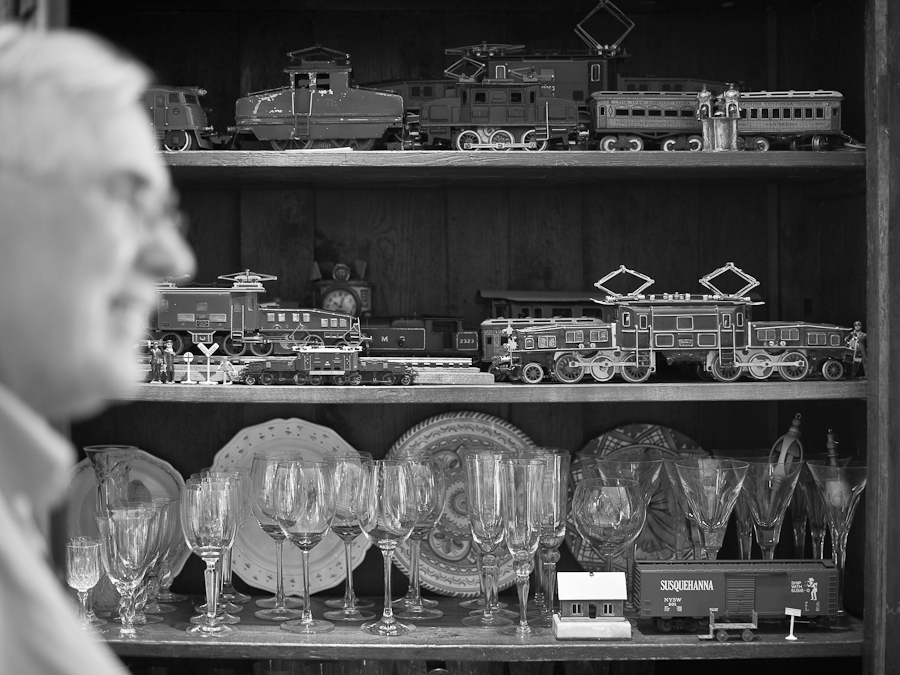
WASHINGTON DC – I traveled to DC today to attend a party given by a friend, Gus Schumacher, helping the James Beard Foundation in launching a new initiative. This is a small part of Gus’s model train collection.